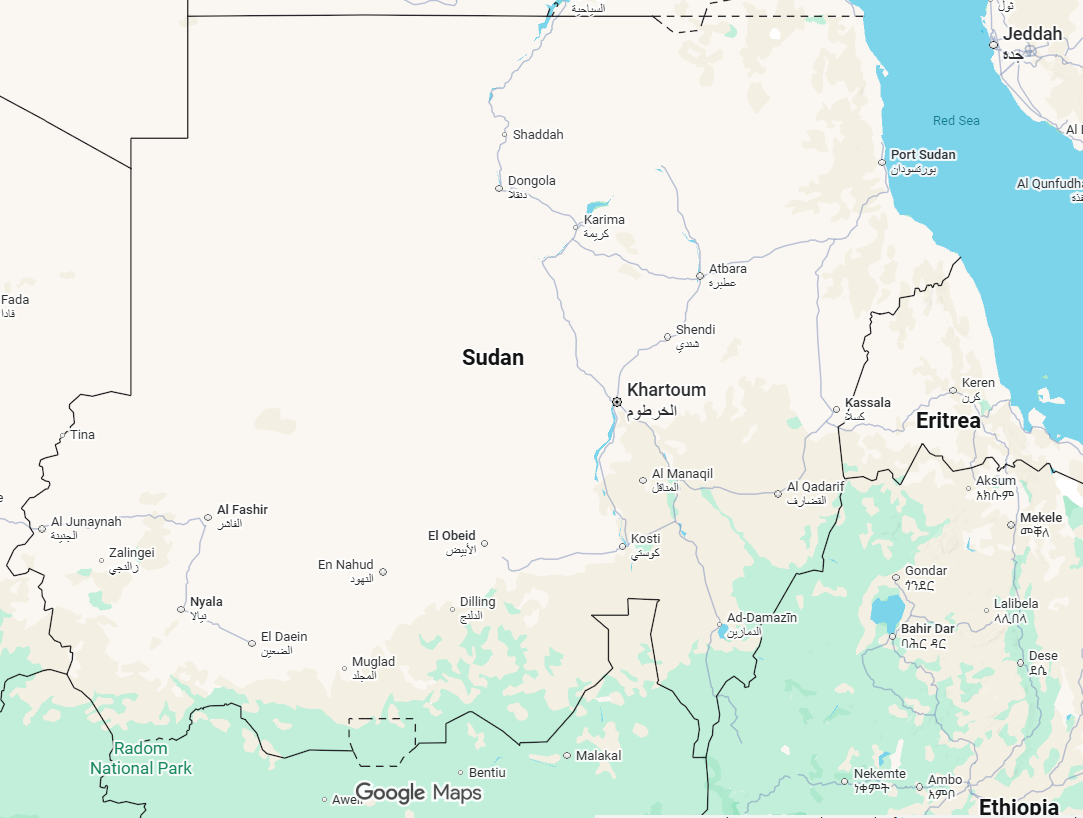

Sudan: Tracing the Origins of the Crisis
THE SUDAN CRISIS - WEBINAR OVERVIEW
SYNOPSIS
This webinar hosted by the Centre for Islamic Research – Africa featured Professor Shamil Jeppie on 14 April 2026 discussing the origins and historical context of Sudan's current crisis.
Professor Jeppie is an Associate Professor from the University of Cape Town with extensive research experience in Sudan.
He provided a comprehensive historical overview, tracing the roots of Sudan's conflicts back to colonial era policies, including the British conquest in 1899 and the subsequent division between northern and southern regions. He explained how ecological factors, resource competition between pastoralists and agriculturalists, and political marginalisation contributed to the ongoing conflict, particularly highlighting the situation in Darfur.
The discussion covered the role of external actors, including the UAE, Saudi Arabia and Egypt in supporting different factions, as well as the impact of military rule and the diaspora community on Sudan's political landscape.
Participants asked questions about race and identity in Sudan, the role of the African Union, and potential paths forward for peace, with Professor Jeppie noting the challenging historical trajectory of military dominance in Sudan's governance.
Sudan's Historical Development - Overview
Professor Jeppie delivered an historical overview of Sudan, explaining how the modern country was created by the British in 1899 through the Anglo-Egyptian condominium following the Ottoman Egyptian conquest in 1820. He detailed the rise of the Mahdist movement led by Muhammad Ahmed, the British response under Charles Gordon and Kitchener, and the implementation of indirect rule through local chiefs and “colonial Sharia” law - or “Sharia as long as it conformed to British standards”. He concluded by discussing Sudan's path to independence in 1956, highlighting the north-south divide that led to the first civil war, with Southern leaders feeling marginalised and discriminated against by the Northern elite.
Sudan's Ethnic and Political Dynamics
Professor Jeppie provided an historical overview of Sudan's ethnic and political dynamics, explaining how northern Arab-speaking tribes historically dominated power while excluding other groups like the Fur people. He described how the southern region gained independence in 2011 after a long civil war, though the new country has since become a corrupt failed state with ongoing internal conflicts. He also outlined the context surrounding the Darfur conflict, explaining how ecological factors combined with political discrimination created tensions between pastoralist and agricultural communities, while noting the regional implications involving neighbouring countries like Ethiopia and Somalia.
Darfur Crisis - Origins
Professor Jeppie discussed the origins of the current crisis in Darfur, highlighting that it was incorporated into the colonial state relatively late and had a long independent history with a sophisticated state structure in Al-Fashir. He noted the limited scholarly work on Darfur and emphasised the importance of understanding ecological and climate factors, including famines, in the region's history. He also touched on the brutal nature of certain historical events.
Tribal Dynamics and Secessionism in Africa
Professor Jeppie discussed the complex and sensitive nature of tribal identifications, highlighting the need for a critical approach in understanding and using tribal terminology.
He also addressed the role of countries like the UAE and Saudi Arabia in the current dynamics of Sudan and the Horn of Africa, noting the support of the former for secessionist movements and the flow of arms into the region. He further emphasised the growing threat of secessionism across the continent, supported by external actors like the UAE and Israel, and stressed the importance of understanding the historical and political context, including the role of the Sudanese military, in addressing current challenges.
African Union's Role in Sudan
The discussion focused on the role of the African Union in Sudan's conflict and the current state of peace efforts. Professor Jeppie explained that while the African Union had previously deployed peacekeepers around 2005, there are currently no effective peacekeeping forces on the ground. He noted that the RSF (Rapid Support Forces) is a formidable force with unclear objectives, and that control of Khartoum's three cities determines political power in Sudan. Regarding mediation efforts, Professor Jeppie indicated that while the military appears amenable to negotiating, the RSF's demand for power sharing faces resistance, and that attention by the “Quad” meant to be negotiating a ceasefire - Egypt, UAE, Saudi Arabia and the US - has been somewhat diverted by other conflicts.
Sudan's Ethnic and Colonial Dynamics
Professor Jeppie discussed questions about racial and ethnic dynamics in Sudan, particularly focusing on how British colonial policies in the 1930s created fixed identities that led to ongoing tensions between northern and southern regions. He explored parallels with Ethiopia's similar identity conflicts and discussed how the Muslim Brotherhood in Sudan has operated under different names, with Hassan Turabi's National Islamic Front being a key historical party. The conversation also touched on US sanctions and how the UAE's attempts to ban the Muslim Brotherhood reflect geopolitical tensions.
Sudanese Diaspora and Conflict Prospects
Professor Jeppie discussed the Sudanese diaspora, highlighting their significant presence in Gulf countries and their role in various professions, particularly in the judiciary and medicine. He explained the historical context of Sudan's resource wealth, including oil and gold, and international interests in these resources. When asked about the prospects for resolving the current conflict, he expressed pessimism about a short- or medium-term resolution, citing Sudan's long history of military rule and the challenges facing civilian society. The discussion concluded with a brief mention of potential roles for South African civil society and government in the peace process. To watch the full webinar, click here.